

[LMD publishes] Simulation of a katabatic wind event in Antarctica with the ICOLMDZ model
Katabatic winds, generated by the flow of cold, dense air descending along the slopes of the Antarctic ice sheet, are a major component of atmospheric circulation in Antarctica. However, their representation remains challenging in atmospheric models due to the complexity of the physical processes involved and the sensitivity to model parameters and spatial resolution.
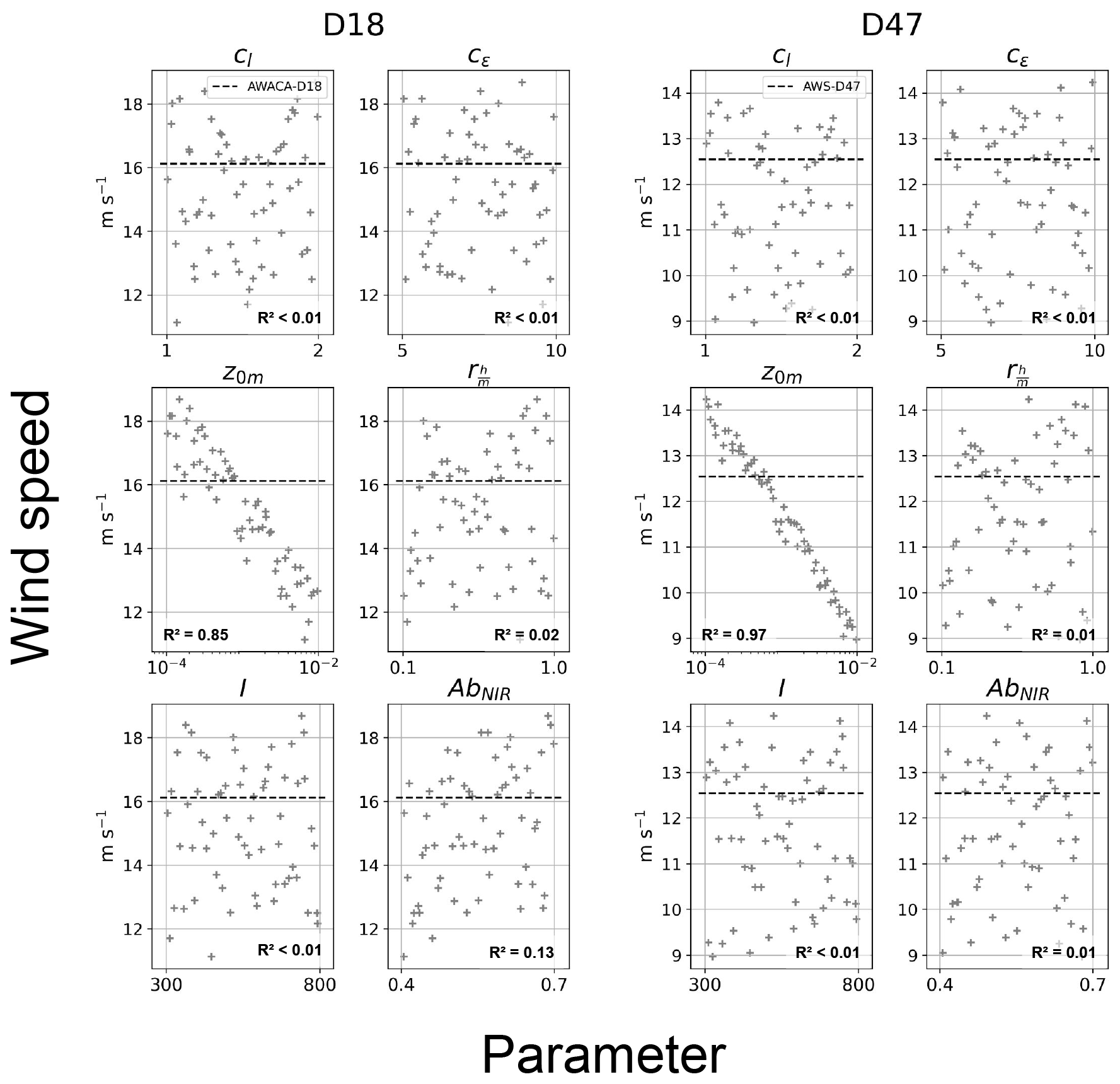
This study evaluates the ability of the atmospheric model ICOLMDZ to simulate a katabatic wind event observed in Adélie Land. Simulations were performed at different horizontal resolutions (10, 20, and 40 km) and with a set of experiments perturbing several physical parameters in order to analyze the model’s sensitivity. The results show that the model is able to realistically reproduce the intensity and evolution of the event, although significant uncertainties remain related to parameter choices and certain structural limitations of the model.
The analysis highlights the particularly important role of the snow surface roughness length in controlling surface wind intensity, while the near-infrared albedo of snow strongly influences near-surface temperature. The study also emphasizes the importance of sufficient horizontal resolution to properly represent the impact of topography on coastal katabatic flow.
This work contributes to a better understanding of the sources of uncertainty in the modeling of katabatic winds in Antarctica and underscores the need to improve, and even develop, certain parameterizations, particularly those related to snow surface roughness.
- Contact: Valentin Wiener (valentin.wiener@univ-rennes.fr)
- Link: Wiener, V., Vignon, É., Caton Harrison, T., Genthon, C., Toledo, F., Canut-Rocafort, G., Meurdesoif, Y., and Berne, A.: An extensive investigation of the ability of the ICOLMDZ model to simulate a katabatic wind event in Antarctica, Weather Clim. Dynam., 6, 1605–1627, https://doi.org/10.5194/wcd-6-1605-2025, 2025.